
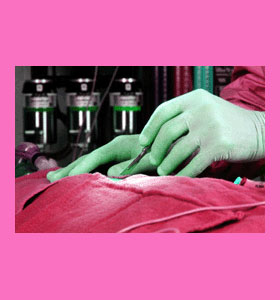
The TRAM flap technique is a popular breast reconstruction procedure which utilizes the patient’s own anatomical tissue to rebuild a new breast mound. TRAM stands for transverse rectus abdominis myocutaneous and describes the bodily area in which the donor tissue is harvested from: the abdomen. There are a variety of TRAM techniques available, each with their own particular indications and contraindications.
This report takes an inside look at the TRAM procedure and how it can be used to repair a missing or damaged breast without resorting to artificial implants.
TRAM Flap Explained
TRAM is a natural breast reconstruction technique which uses skin, connective tissue, vascular tissue and muscular tissue from the patient’s lower abdominal region to recreate a breast after mastectomy or severe breast injury.
The flap tissue is harvested from the area between the belly button and the pubic region. The common name for this technique is the tummy tuck breast reconstruction, since the procedure is very similar to that used during an abdominoplasty operation.
The flap is usually cut free from the lower abdomen and moved to the reconstruction site through the interior of the body, maintaining neurological and vascular supply to the tissue.
Occasionally, a free tissue graft is harvested completely off the abdomen and then reattached on the chest wall, utilizing micro-surgery to repair the nerve and blood vessel connections. This more complicated procedure is called a free flap TRAM reconstruction.
Other variations of the free TRAM procedure include the DIEP (deep inferior epigastric perforator flap) and SIEP (superficial inferior epigastric perforator flap) techniques, which are incredibly intricate and time consuming operations.

TRAM Breast Reconstruction Benefits
The best part of the TRAM procedure is that it can usually rebuild a new breast completely, using only organic tissue from the patient. This prevents any complication which might be associated with breast implant use in post-mastectomy patients.
In addition, the area where the tissue is harvested undergoes an extensive cosmetic change, producing a nice flat belly, which is a big benefit for women with some extra weight around the middle.
Attached TRAM flaps usually heal very well and form a realistic breast shape with minor cosmetic sculpting. The procedure is covered under health insurance in the US, which is a big relief to women who cannot afford to pay for reconstruction on their own.
TRAM procedures can be performed at the same time as a mastectomy or at any time post-operatively.

Drawbacks of the TRAM Flap Procedure
The surgery, in any form, is very invasive and complicated. The procedure lasts for several hours and takes a toll on the health of the individual.
Post-operative pain might be severe at both the donor site and the reconstruction site. Post reconstruction physical activity is severely limited for several weeks to several months.
Not all women can undergo the TRAM procedure. One of the most common contraindications affects women with limited abdominal tissue available for harvesting. The amount of tissue required is directly related to the size of the breast mound which needs to be created.
Most women will endure significant muscular weakness in the abdominal region, while the donor site is healing. This weakness might be permanent, but can be improved using physical therapy to increase surrounding muscular strength.

TRAM Flap Expectations
This operation is a marvel of medical science and human ingenuity. The first time we actually witnessed this procedure, we were in awe of the precise surgical techniques applied and the realistic results.
Remember that the full reconstruction process will usually take more than one operation. Nipple and areola reconstruction will have to be done after the basic procedure has healed.
In addition, there is a good chance that cosmetic revision of the natural breast might be indicated to achieve symmetry with the reconstructed breast.
TRAM procedures are an excellent option for women who really want an all-natural approach to breast reconstruction.
Talk to your doctor about how this technique might just be able to replace the breast you have lost. Make sure to choose your plastic surgeon carefully, since the final outcome will depend greatly on the surgeon’s skill and experience.